

Most health journeys begin with a simple question: “Who should I see first?” For families across Ranchi, the answer is usually a General physician Ranchi patients can trust. A general physician is the doctor who listens to the whole story, looks at your health as a connected picture, and decides what can be managed in clinic and what needs a specialist. When fever will not settle, when blood sugar is hard to control, or when a stomach upset keeps coming back, a good general physician brings clarity and a plan. Dr. Angshuman Sinha provides this kind of primary care, and when a patient needs a typhoid specialist doctor near me or another focused opinion, we guide them to the right next step.
This article offers general information and does not replace an in-person consultation. Any symptom that is severe, new, or getting worse should be assessed by a doctor promptly.
Our clinic can be reached at +918092641474. The address is Dr. Luna Path Labs, Bijan Bihar, behind Old Women’s College, Nagra Toli, Ranchi, Jharkhand 834001.
What a General Physician Actually Does
A general physician is the foundation of healthcare. Rather than focusing on one organ or one disease, a general physician considers your age, medical history, medicines, lifestyle, and family background. This broad view helps catch problems early and avoid unnecessary tests. Many people never need to see a specialist for common concerns, because a thorough consultation and sensible follow-up are enough.
When a problem does need specialist input, a general physician acts as the coordinator. They explain why a referral is needed, share relevant reports, and follow up after the specialist’s advice so that your care stays connected rather than scattered.
Your First Visit: What to Expect
A first visit usually begins with a detailed conversation. Be ready to describe when your symptoms started, what makes them better or worse, what medicines you take, and any allergies you have. Bring previous prescriptions and reports, even if they seem unrelated. Old records can reveal patterns that help the doctor understand your condition faster.
The examination follows, and depending on your concern, the doctor may order blood tests, urine tests, or imaging. A clear treatment plan is then explained, along with warning signs to watch for and when to come back. We believe patients should leave understanding their condition, not just holding a prescription.
Fever, Infection, and Typhoid: Why Start With a Physician
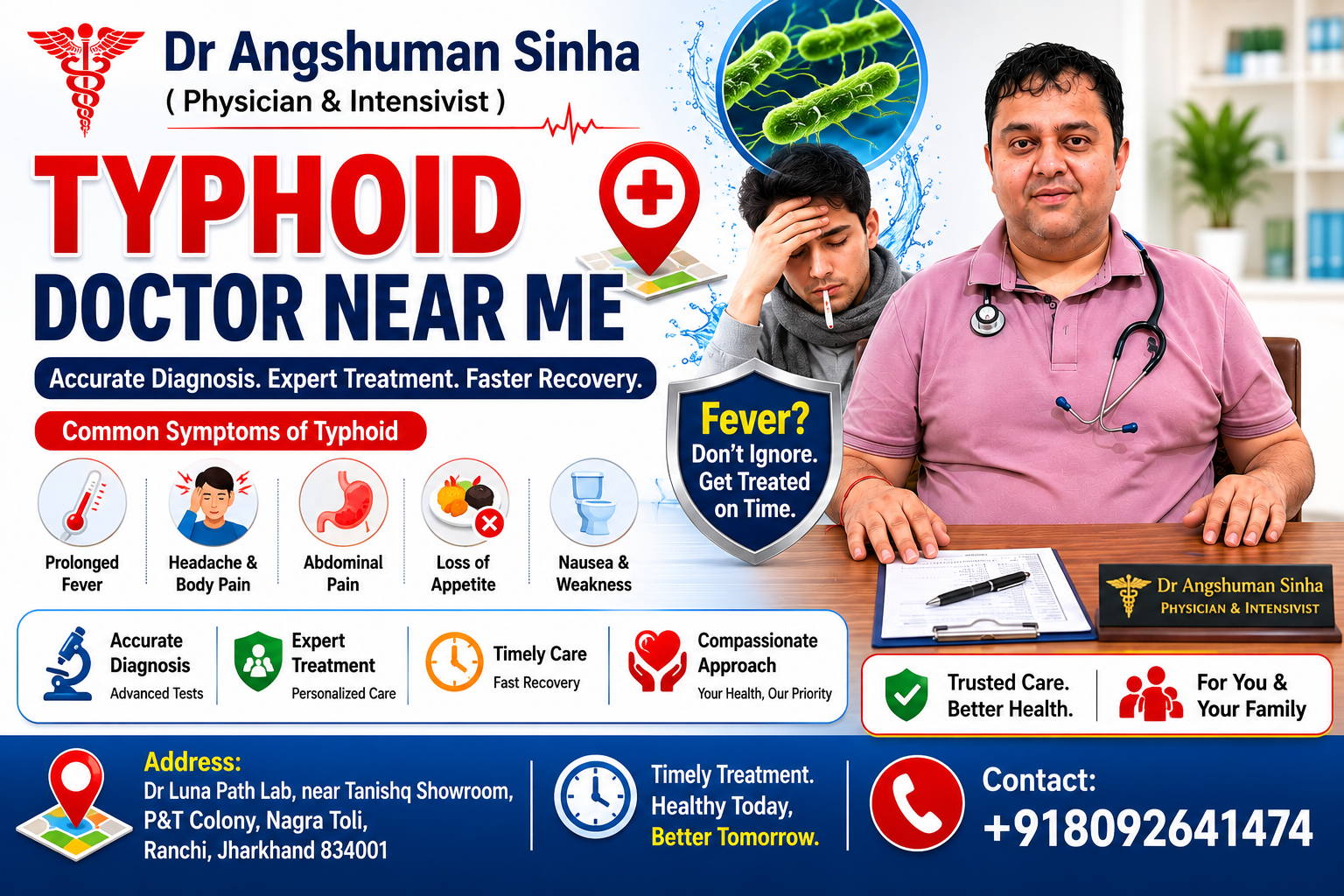
Fever is one of the most common reasons people visit a clinic, and it is also one of the most important symptoms to evaluate carefully. Many fevers are viral and resolve with rest and fluids, but fevers lasting several days need proper investigation. Typhoid is one example. It is caused by bacteria spread through contaminated food and water, and it often presents with prolonged fever, headache, weakness, loss of appetite, and abdominal discomfort.
People searching for a typhoid specialist doctor near me sometimes wonder whether they need a specialist immediately. In practice, a general physician usually begins the evaluation, orders the right tests such as blood investigations, and decides whether referral is necessary. This approach means you get the right care sooner, without unnecessary delay.
Practical steps help too. Drink safe water, eat freshly cooked food, wash hands thoroughly, and rest. If a doctor prescribes medicine, complete the full course as directed. Stopping early can allow infection to return.
Managing Chronic Conditions: Diabetes and Beyond
Long-term conditions need regular, steady care. Diabetes is among the most common, and many patients rely on a general physician for ongoing management, including blood sugar monitoring, review of HbA1c results, medication adjustments, and checks for complications. Patients searching for a diabetes doctor in Ranchi or a diabetes doctor near me often find that consistent follow-up with one familiar physician makes the biggest difference.
Good diabetes care combines medication where needed, a balanced diet, regular physical activity, and timely check-ups. Small, consistent habits usually produce better results than dramatic short-term changes.
Concerns Often Seen in General Practice
Beyond infections and chronic disease, general physicians manage a wide range of everyday problems. Stomach and gastric concerns such as acidity, bloating, indigestion, and changes in bowel habits are frequent reasons for visits. Persistent symptoms, weight loss, or blood in stools should always be checked. Headache and migraine are also common, and identifying triggers such as poor sleep, dehydration, stress, or certain foods often brings real relief.
Some conditions need specialist attention, and a general physician will guide you there. For example, patients with persistent bleeding or jaundice may be referred for further evaluation, and a piles doctor in Ranchi or a jaundice doctor near me may be the right next step depending on the findings. Similarly, if thyroid tests point to a concern, a general physician can explain the results and arrange appropriate follow-up. Patients looking for the best thyroid doctor in Ranchi can rely on their physician to guide that decision based on their tests and history.
Skin Allergy and Common Skin Concerns
Itching, rashes, hives, and redness are frequent complaints, and their causes range from allergies to infections and irritation. Many people search for an allergy doctor in Ranchi after a rash keeps returning or when they cannot pinpoint a trigger. A careful history is often the most useful tool, covering new foods, medicines, soaps, detergents, cosmetics, and environmental exposures. Treatment works best when guided by examination rather than trial-and-error creams or tablets.
Preventive Health and Routine Check-Ups
Prevention is one of the most valuable parts of primary care. Routine check-ups can track blood pressure, blood sugar, cholesterol, and other markers before problems become serious. Adults benefit from a yearly review, and anyone with a family history of diabetes, heart disease, or thyroid conditions should discuss screening schedules with their physician.
Serving Patients Across Ranchi
We welcome patients from many parts of Ranchi, including Lalpur, Kantatoli, Dangartoli, Circular Road, Main Road, Chutia, Harmu, Kanke Road, Bariatu, Kokar, Ratu Road, Morabadi, Doranda, Upper Bazar, Main Road, Hindpiri, Booti More, Hinoo, and Dhurwa. Our clinic near Nagra Toli is accessible from several parts of the city, and we recommend calling ahead to confirm timings before your visit.
When to Seek Urgent Care
A general physician can handle many concerns, but some symptoms need emergency care. Seek immediate help for chest pain, difficulty breathing, confusion, fainting, vomiting blood, heavy bleeding, severe abdominal pain, very high fever with stiff neck or rash, or sudden weakness on one side of the body. Do not wait for a routine appointment in these situations.
Conclusion
A General physician Ranchi can rely on patients to offer continuity, clear communication, and a coordinated path through every stage of care. From routine check-ups and fever evaluation to diabetes management, stomach and headache concerns, and skin allergies, a trusted physician helps you stay healthy and know when to seek specialist input. When a typhoid specialist doctor near me becomes necessary, your physician can guide you through the referral and share the relevant information.
Dr. Angshuman Sinha is committed to thoughtful, unhurried consultations. To book an appointment or ask a question, call +918092641474. Visit Dr. Luna Path Labs, Bijan Bihar, behind Old Women’s College, Nagra Toli, Ranchi, Jharkhand 834001.
Frequently Asked Questions (FAQ)
Q1: What does a general physician treat?
A general physician manages a wide range of concerns, including fever and infections, stomach problems, headaches, skin conditions, and long-term conditions such as diabetes. They also coordinate referrals when a specialist is needed.
Q2: Do I need a referral to see a general physician?
No. You can usually book a consultation directly. Your physician will refer you to a specialist if your condition requires it.
Q3: When should I consider a typhoid specialist doctor near me?
Your general physician will usually start the evaluation for fever and typhoid. A referral to a specialist may be recommended if the illness is complicated or does not respond as expected.
Q4: How is typhoid diagnosed?
Diagnosis typically involves a clinical assessment and blood tests, ordered by a doctor based on your symptoms and history. Self-diagnosis is not recommended.
Q5: Can a general physician manage diabetes?
Yes. Many patients are managed long-term by a general physician. For a diabetes doctor in Ranchi or a diabetes doctor near me, the physician can also refer you to a specialist when needed.
Q6: Should I see a doctor for stomach problems that keep coming back?
Yes. Recurring symptoms, weight loss, or blood in stools should be checked by a doctor to find the cause and plan appropriate care.
Q7: What should I do about a thyroid concern?
A general physician can order a simple blood test to assess thyroid function and explain the results. If further evaluation is needed, they will guide you to the right next step.
Q8: Can I see an allergy doctor in Ranchi for a skin rash?
Yes. A careful history and examination help identify triggers. Your physician can advise on treatment or refer you if further specialist input is required.
Q9: Do you see patients from areas across Ranchi?
Yes. We welcome patients from many localities, including Lalpur, Kantatoli, Circular Road, Kanke Road, Bariatu, Doranda, and Dhurwa, among others.
Q10: How often should adults have a routine check-up?
Most adults benefit from a yearly check-up. People with a family history of chronic conditions or existing health concerns may need more frequent reviews, as advised by their physician.
Q11: How do I book an appointment?
Call +918092641474 to check timings and book a consultation. Please call ahead to confirm availability.
Q12: What should I do in an emergency?
Do not wait for a routine appointment. Seek emergency medical care for chest pain, breathing difficulty, confusion, fainting, heavy bleeding, or sudden weakness.