
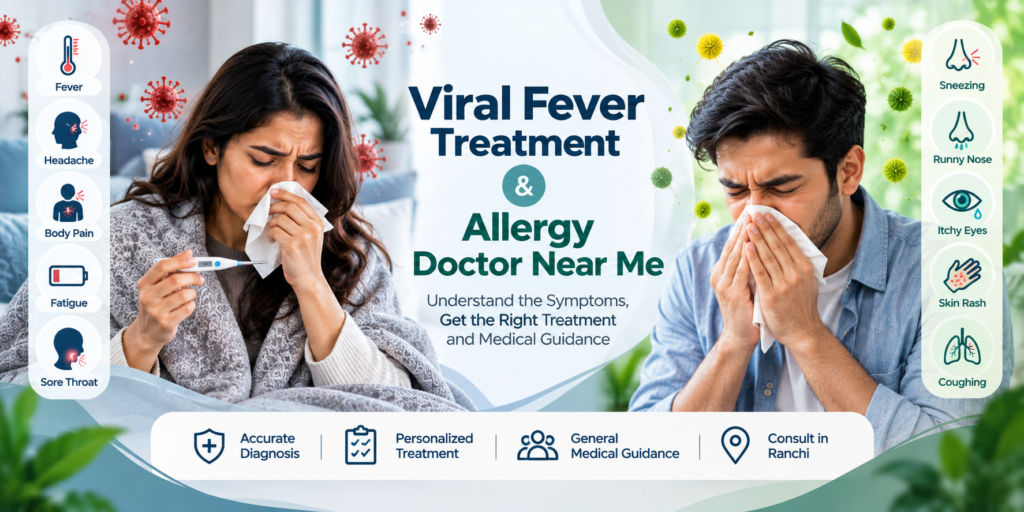
What is the best time to seek medical advice for viral fever and allergy? Viral Fever Treatment and Allergy Doctor Near Me.
Life can be uncomfortable due to fever, sneezing, running nose or itching all day. Some of these symptoms may be seen in the case of viral infections while in a few instances, allergies may be the cause of these symptoms. Knowing the difference may help you determine when to seek medical advice. When a person is seeking viral fever treatment, or wants to find the allergy doctor near me on the internet, going for consultation with a qualified GP can help them know what precisely their symptoms suggest, and whether they require medical treatment. Viral fever is a condition where the body is overrun by a viral infection. This is Viral Fever and its symptoms. Viral fever is a fever occurring due to viral infection. May also happen with infections of the respiratory tract or other organs. Sometimes, symptoms and how bad they are, can differ in individuals. Symptoms are often: Fever or shaking. Headache and back/muscle pain. Fatigue and weakness. Sore throat or a runny nose. Sore throat or loss of appetite. Most non-complicated viral infections will get better with rest. But, fever sticking and/or an increase in symptoms or unusual symptoms should not be overlooked. Viral fever treatment should be sought when: While some fever may be helped by rest and sufficient fluids, medical evaluation is important if present if it is severe, persistent, or worsening. A general practitioner can check the temperature, symptoms, medical history and fluids levels to see if you require further investigation and/or treatment. Some steps in recovery may be helpful such as: Swallowing adequate amounts of fluid, such as water. Getting adequate rest. Ingestion of small amounts of light, nutritious food, if tolerated. Monitoring your temperature and changes in symptoms. When taking medication only as prescribed by a medical practitioner. Viruses will not respond to antibiotic treatment and should never be used unless prescribed by a doctor. Treatment varies depending on the suspected cause of the fever and the person’s health. Seek immediate medical help if trouble breathing, confusion, severe dehydration, continued vomiting, severe headache with stiff neck or bad symptoms start. Fevered infants and those who are pregnant, immunodeficient, and/or elderly may require earlier evaluation. Looking for an Allergy Doctor Near Me? An allergy is a response of the immune system to a substance that would not normally cause a reaction, like pollen, dust mites, mold, food or animal dander. If you are the type of person who keeps looking around for an allergy Physician Near Me often, specifically when symptoms display routinely, a health care assessment can assist uncover the probable triggers and management alternatives. Common allergy symptoms are: Sneezing and stuffy or running nose that occurs many times. Itchy, watery eyes. Skin rash, itching or rashes. Symptoms that return after exposure to particular substances. In some cases, coughing or wheezing will occur. Sometimes the symptoms are similar to allergies and viral infections or colds. A medical professional can take note when signs and symptoms began, how long they lasted, as well as whether specific exposures worsen signs and symptoms. The best way to control allergy symptoms is… Part of the picture of allergy appears to be the identification and minimisation of the causes/drivers of allergic symptoms. A doctor may prescribe appropriate treatment, helpful changes to your environment or a referral to an allergy specialist if needed. Do not keep taking medication without being sure of the cause of symptoms. Seek emergency medical assistance immediately if after a possible allergen exposure you have sudden swelling of the tongue and/or throat with difficulty breathing or fainting. Medical guidance is essential these days; that is why people in Ranchi go to Dr. Angshuman Sinha to obtain General Medical Guidance. Angshuman Sinha, M.D., a resident of Ranchi, is a General Physician. A consultation may be useful in determining if there are common health concerns which should be assessed such as fever and symptoms that could be associated with allergy, or whether further investigations are warranted or specialist referral is needed. If you’re looking for expert advice on treating viral fever treatment or finding an allergy doctor near me, you need to find a reputable Healthcare Professional who can aid you with your symptoms and suggest the following steps. Avoid dismissing persistent, recurrent and interfering symptoms. Opportunistic medical counseling can help you to become acquainted with the potential causes and help you make decisions about your health. Frequently Asked Questions 1. Which is the best way to treat a viral fever? Treatment is dependent on the cause and severity. The early symptoms of fever, rest and plenty of fluids to help, but persistent and worsening fever should be evaluated by a medical professional. 2. For how many days does a viral fever last typically? For the majority of non-complicated viral fevers, recovery will occur within a few days and varies from virus to virus. If the fever doesn’t go away or symptoms get worse, get medical attention. 3. When should I see the doctor for the treatment of viral fever? If fever doesn’t improve, is severe, or if it persists or if you have concerning symptoms, talk to a doctor. 4. Where can I get an allergy specialist in my area? Seek advice from a trained health care provider who should be able to examine the symptoms, determine a diagnosis, tell you what could be causing the symptoms and suggest treatment or a referral to a specialist. 5. How do you know if it is an allergy or a viral infection? Usually itching, sneezing and watery eyes are the main symptoms of an allergy, which may follow exposure to an allergen. May have fever, body aches and fatigue due to viral infections. The symptoms may be similar and a medical evaluation may be necessary. 6. Can allergies be treated by a GP? Yes. Common Symptoms of allergic reactions can be judged by a general physician who will then be able to suggest what the right treatment should be and whether it’s necessary to